
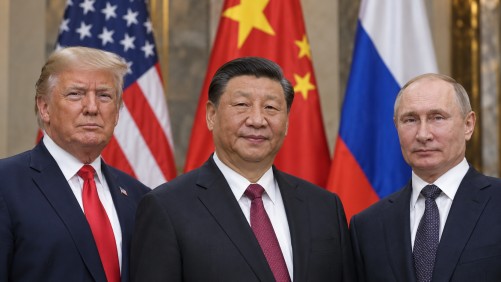
In a groundbreaking trilateral meeting held in Shenzhen, China on November 19, 2026, U.S. President Donald Trump, Chinese President Xi Jinping, and Russian President Vladimir Putin pledged to enhance cooperation on nuclear security and global energy supplies. The leaders issued a joint statement emphasizing their commitment to international stability, underscoring the imperative that a nuclear war cannot be won and must never be fought.
The summit, deemed a historic diplomatic event by the participants, aimed to address critical issues such as nuclear risk reduction, energy cooperation, and the reform of international institutions. Despite the lack of significant resolutions on ongoing conflicts in Ukraine and Iran, the leaders agreed to bolster efforts to maintain global energy markets by increasing the production and supply of refined petroleum products.
The discussions on nuclear security followed the expiration of the New START nuclear arms control agreement between the U.S. and Russia in February 2026. President Trump expressed interest in negotiating a new agreement that includes China, although Beijing remains hesitant due to its comparatively smaller nuclear arsenal.
Energy security was a focal point of the dialogue, with Trump highlighting the strategic importance of ensuring oil shipments continue through the Strait of Hormuz, a vital corridor impacted by the conflict in Iran. The leaders’ commitment to energy cooperation aims to stabilize global markets amid geopolitical tensions.
In addition to the trilateral discussions, President Trump held separate bilateral meetings with each counterpart. Talks with President Xi centered around economic and trade relations, agricultural purchases, and regional security issues, including Taiwan. Both leaders signaled their intent to sustain stable bilateral relations and improve communication.
Trump’s meeting with President Putin marked their first encounter since Alaska in 2025, where they focused on international security and the Ukraine conflict. However, no major agreements regarding the war were reached.
The summit’s joint declaration also touched upon the International Criminal Court, calling for the respect of state officials’ immunity and cautioning against judicial overreach. Although the meeting did not yield concrete solutions to ongoing geopolitical conflicts, it represented a significant diplomatic engagement with potential implications for future cooperation among the three global powers.