
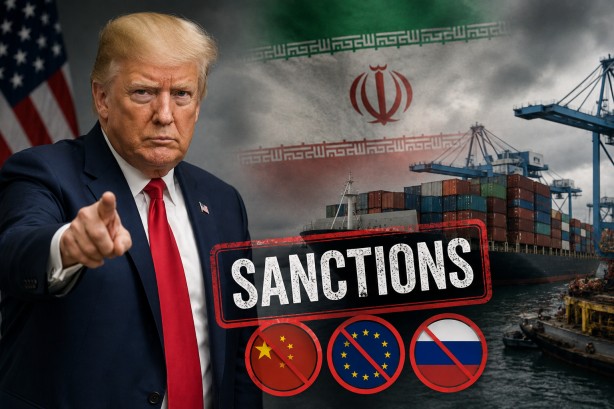
In a bid to further isolate Iran economically, the United States has issued a stern warning of stringent sanctions against nations and firms that continue to engage in business with Tehran. US Treasury Secretary Scott Bessent outlined that the focus of this campaign will be on those facilitating Iranian oil transactions and other revenue-generating financial activities. Entities maintaining economic ties with Iran could face deadlines to sever these connections or risk facing US-imposed penalties.
This aggressive stance by Washington has sparked apprehension regarding a possible clash with China, Iran’s primary trade ally and a significant consumer of its oil exports. Beijing has criticized the US’s pressure tactics, advocating instead for political dialogue and diplomacy over punitive measures.
In response to the US’s escalated sanctions efforts, Iran has warned of potential retaliatory measures against countries that align with the US campaign, hinting at possible military or cyber responses. This development further complicates the ongoing tensions over Iran’s nuclear ambitions and the strategic Strait of Hormuz, a vital channel for global oil shipments, where both economic and maritime pressures have been mounting.
The US insists that its economic pressure is a strategy to compel Iran to alter its behavior following unsuccessful military interventions. Nevertheless, officials have not ruled out the possibility of future military action. The US-led sanctions initiative has already begun to affect Iran’s trade relations, with the United Arab Emirates announcing a halt to its trade activities with Iran. Meanwhile, Turkey, another significant trading partner of Iran, has yet to declare its stance in reaction to the evolving US measures.