
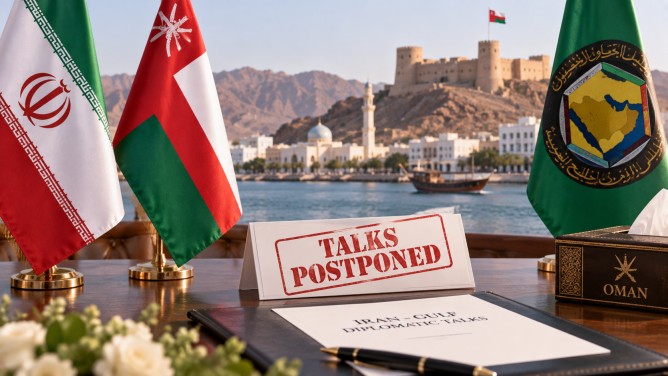
A meeting planned between Iran and Gulf nations in Oman has been postponed following requests from some regional governments, as announced by Iranian state media. The decision to delay the talks was mutually agreed upon by Tehran and Muscat. While Iranian officials did not specify which countries sought the postponement, Omani Foreign Minister Badr Albusaidi confirmed that the gathering, initially set to occur in Salalah, has been deferred. Albusaidi stated that the postponement aligns with efforts to achieve regional consensus and emphasized Oman’s dedication to fostering dialogue for stability and long-term cooperation.
The discussions were intended to address various regional issues, including potential agreements on maritime navigation through the Strait of Hormuz. This strait is a crucial oil transit route globally, underscoring its importance to international energy markets. Ensuring smooth vessel movement through this strategic passage has been a focal point of bilateral talks between Iran and Oman. Oman, which oversees the coastline opposite the strait, has previously mentioned that these discussions have the backing of other Gulf Arab states.
The delay in the meeting occurs amid increasing tensions in the region, where the Strait of Hormuz plays a pivotal role in global oil shipments. Any disruptions to maritime traffic in this area are of significant concern to international energy markets, highlighting the urgency and importance of maintaining open dialogue among regional players.
Oman’s commitment to facilitating these discussions reflects its strategic position and influence in the region. The country has historically played a mediating role in regional affairs, aiming to balance interests and promote cooperation. This postponed meeting is part of broader efforts to ensure stability and address pressing issues collectively, reinforcing the shared interests of neighboring countries in maintaining secure and efficient maritime routes.
As the situation unfolds, all eyes will be on how regional dynamics evolve and whether the postponed talks will pave the way for future agreements to enhance cooperation and security in this geopolitically sensitive area. The outcome of these efforts will likely have a lasting impact on regional relations and the global energy supply chain.