
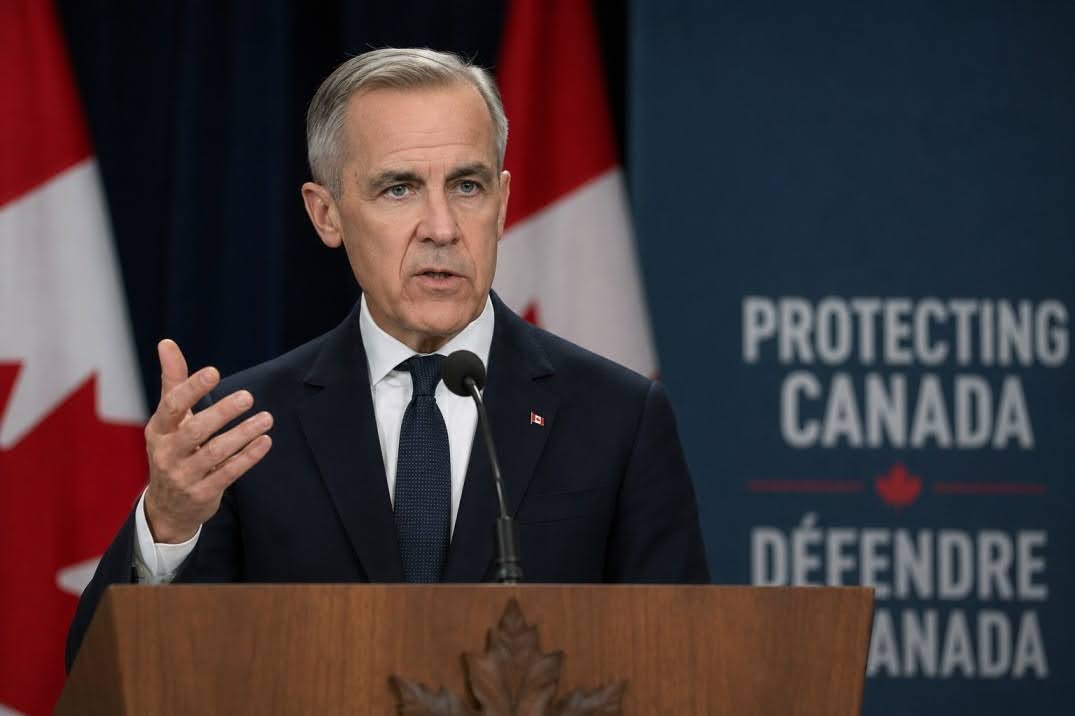
Canadian Prime Minister Mark Carney has delivered a pointed critique of the Trump administration, urging U.S. officials to end the mockery and approach trade discussions with sincerity. This comes as Canada is poised to implement retaliatory tariffs on American products in response to U.S. measures. Carney condemned the derogatory remarks aimed at Canada, stating they were unworthy of the involved offices, and emphasized that authentic trade negotiations could only recommence if the U.S. ceased its trivial exchanges and focused on meaningful dialogue.
The situation has been escalating for weeks, highlighted by President Trump’s recent decision to rename Lake Ontario as “Lake America,” a move that met with significant disapproval in Canada. Meanwhile, the U.S. chief trade negotiator has minimized the potential repercussions of the dispute, suggesting that the economic impact would be more severe for Canada than the U.S. The negotiator also confirmed that no active trade negotiations are currently in progress, following the breakdown of trade talks between the two nations about a week ago.
In retaliation to the collapse of negotiations, the U.S. imposed a 50% tariff on $20 billion worth of Canadian goods, prompting Canada, one of the U.S.’s major trading partners, to announce reciprocal tariffs on $20 billion of American goods, effective September 8. These tariffs are expected to affect consumers in both countries, impacting everyday products. The U.S. negotiator attributed much of the failed talks to Canada’s demands, such as lowering taxes on heavy-duty trucks, and questioned Canada’s commitment to reaching a deal. He also hinted at the possibility of the U.S. considering similar restrictions if Canada moves to limit American goods and services.
Canadian officials, however, have provided a different perspective, pointing to internal White House disagreements over who was in charge of the negotiations. Carney also noted that American negotiators viewed Canada’s French-language protections as a contentious issue, despite these being longstanding rights, especially in Quebec. President Trump has portrayed the conflict as Canada wanting the benefits of close relations with the U.S. without fully integrating and has accused Canada of imposing burdensome tariffs on U.S. agricultural products for many years.
The U.S. negotiator admitted there was confusion about the actual issues at stake during the negotiations, not clearly identifying whether the impasse was due to political or economic reasons. However, he maintained that the options were never simply between the current tariffs and completely duty-free trade.