
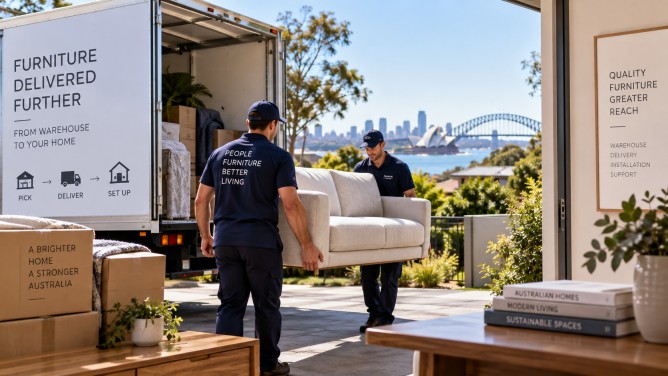
Australia’s furniture industry is witnessing a transformation in delivery management as brands and interior designers increasingly opt for logistics providers that handle multiple supply chain stages. This shift is primarily driven by the surge in online furniture sales and the need to move large, high-value items across state lines. Unlike typical parcel deliveries, furniture logistics require specialized handling, including scheduled home delivery, assembly, and packaging removal.
The challenges associated with furniture logistics are multifaceted. The bulky and heavy nature of furniture makes it vulnerable to damage, and deliveries often face obstacles such as apartment buildings with narrow staircases or properties lacking elevators. The rise of online shopping has heightened these challenges, as customers buy furniture sight unseen, making the delivery and installation process crucial to their overall experience. With Australia’s furniture retail market valued at approximately $12.6 billion annually and online sales projected to grow, businesses are increasingly looking to consolidate services like transportation, storage, and assembly with specialized providers to manage costs and workforce pressures.
Brilliance Removals, which has been operational since 2015, exemplifies this trend by expanding its offerings to support furniture brands and interior design firms. Operating in cities such as Sydney, Melbourne, Brisbane, Perth, Adelaide, Townsville, and Cairns, the company has been providing logistics services to notable furniture brands since December 2025. These services range from local deliveries to comprehensive logistics solutions that include interstate transport, warehousing, final-mile delivery, furniture assembly, and packaging removal. The company notes that more furniture brands are seeking logistics partners capable of managing both transportation and customer-facing delivery components.
The role of specialized logistics extends to interior design projects, where coordinated delivery and temporary storage are often necessary. As residential and commercial projects may receive items from various suppliers at different times, logistics providers that offer storage and synchronized delivery can significantly impact project timelines. Delays in furniture delivery can disrupt installation schedules and project handovers, underscoring the importance of comprehensive logistics solutions that go beyond mere transportation.
Looking ahead, the Australian interior design sector is poised for growth over the next decade, with furniture purchasing increasingly shifting towards digital platforms. These trends are expected to boost demand for logistics services capable of handling larger and more intricate deliveries. As a result, logistics companies equipped with the necessary infrastructure, trained personnel, and equipment are well-positioned to capitalize on this evolving market, where logistics decisions are increasingly influenced by factors beyond transportation costs, including delivery scheduling, product handling, and customer experience.
Legal Disclaimer:
The information contained in this article has been provided by independent third-party contributors, clients, or content partners. We do not independently verify the accuracy, completeness, legality, ownership, licensing, or reliability of submitted content, including text, images, videos, trademarks, or other media materials. The submitting party is solely responsible for ensuring that all content, including images and media assets, complies with applicable copyright, trademark, licensing, and intellectual property laws. We disclaim liability for any unauthorized use of copyrighted or proprietary materials by third parties. If you believe that any content published on this platform infringes your intellectual property rights, kindly contact the author above for prompt review and resolution.