
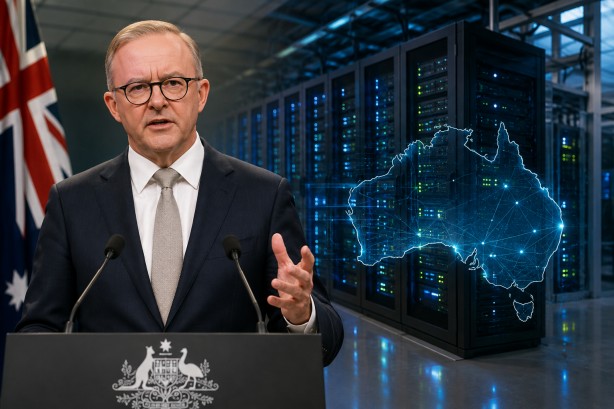
Australian Prime Minister Anthony Albanese is aiming to establish national guidelines for datacentre developments, collaborating with state and territory leaders to address concerns about increased electricity demand and environmental impacts. At an upcoming national cabinet meeting, Albanese intends to endorse a legislative framework that would standardize minimum requirements for datacentres. These requirements include ensuring datacentres cover their own infrastructure costs, mitigate upward pressure on energy prices, and reduce water usage.
The proposed regulations would also mandate that new datacentre projects evaluate their potential effects on local communities and be constructed away from residential areas, schools, and sites designated for agriculture or future housing developments. This initiative arises as Australia’s energy market operator anticipates a significant rise in datacentre electricity consumption over the next decade, largely due to advancements in artificial intelligence and cloud computing. Predictions indicate that electricity usage by datacentres could increase from approximately 5 terawatt-hours to 34 terawatt-hours by 2035-36, potentially constituting 13% of the nation’s total electricity consumption.
Currently, Australia hosts 165 operational datacentres, with an additional 225 projects in the pipeline. However, there remains a degree of uncertainty in the industry, as many previously proposed projects have been discontinued. In tandem with datacentre regulations, Albanese is also preparing comprehensive legislation on artificial intelligence, addressing issues such as copyright protections, security, safety, and skills development. The government asserts that these reforms are designed to ensure Australians economically benefit from AI advancements while safeguarding creators’ rights and enhancing national security.
While the plans for national datacentre regulations have been met with some opposition, particularly regarding the proposed renewable energy requirements, the government continues to push for consistent rules across the country. Some state leaders have expressed concerns about these energy mandates, adding a layer of political complexity to the establishment of unified national standards.