
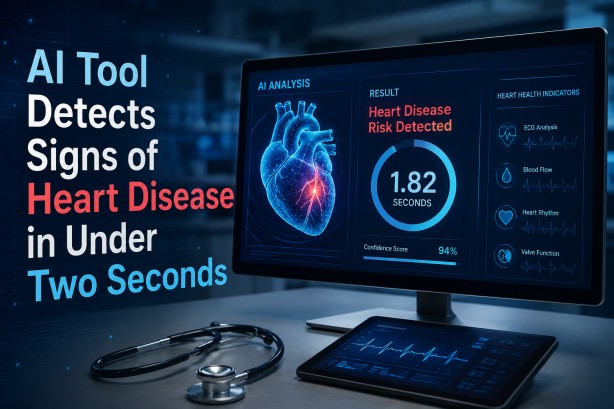
A groundbreaking artificial intelligence tool has been developed to swiftly analyze routine electrocardiograms (ECGs), identifying patients at heightened risk for heart failure and heart valve disease in under two seconds. This innovative technology, trained on millions of ECGs, is capable of detecting patterns that might elude doctors during standard assessments.
In a comprehensive trial involving 67,000 patients in the United States, the AI tool demonstrated its efficacy by accurately identifying up to 81% of individuals with heart failure and up to 90% of those with heart valve disease. Given that ECGs are among the most prevalent medical tests, with approximately one billion conducted globally each year, this tool could significantly impact how heart conditions are detected.
Typically, patients suspected of heart disease must undergo an echocardiogram, a process that often involves lengthy waiting periods. While this AI tool is not designed to provide a conclusive diagnosis independently, it serves to highlight high-risk patients who should be prioritized for echocardiograms and additional testing. This prioritization could lead to earlier commencement of treatment, improving patient outcomes.
Researchers suggest that this technology might eventually be utilized to analyze ECGs conducted for other medical reasons, potentially uncovering previously undiagnosed heart conditions. This could enhance the overall effectiveness of routine medical testing by adding a layer of predictive analysis to standard procedures.
The development team is also investigating the creation of portable AI-powered ECG devices for use by healthcare professionals. Such advancements could make early detection more rapid and accessible, transforming the landscape of heart disease diagnostics and treatment.