
Despite weeks of intensive US and Israeli bombing that had killed senior leaders and devastated key infrastructure, Iran’s regime remained structurally intact on Saturday and continued to wage an aggressive military campaign across the Gulf region, according to analysts and conflict monitors. The assessment undercut arguments that military pressure alone would bring Tehran to the negotiating table and raised the prospect of a prolonged conflict with mounting costs on all sides. Iran’s actions on Saturday — missiles into the UAE, rockets at Israel, and threats against Gulf energy facilities — bore out the analysis.
Ali Vaez of the International Crisis Group described Iran’s approach as a deliberate three-part strategy: ensure the regime’s survival, maintain enough military capacity to remain in the fight, and prolong the conflict until it could be ended on Iranian terms. Despite the loss of senior figures and significant infrastructure damage, the government appeared to retain the organisational coherence needed to execute this plan. US Defence Secretary Pete Hegseth’s characterisation of Iranian leaders as “desperate and hiding” was contested by analysts who pointed to the continued sophistication of Iran’s military operations.
US warplanes struck Kharg Island on Saturday for the second consecutive day, adding to the destruction begun on Friday. President Trump said in public statements the island had been effectively demolished and left open the possibility of further strikes. He also called on China, France, Japan, South Korea, and the UK to send warships to the Strait of Hormuz, acknowledging for the first time that reopening the waterway might require a multilateral effort. The strait, closed since the war began on February 28, carries about 20 percent of global oil and gas.
Iran struck back across the region. Ballistic missiles hit Fujairah in the UAE, suspending oil-loading operations. Iranian commanders threatened to attack any Gulf energy facility with American ties. The foreign minister demanded Arab states remove US forces. Israeli warplanes conducted dozens of raids inside Iran, killing at least 15 people in Isfahan. Iran continued firing rockets at Israel simultaneously, keeping multiple fronts open. Energy prices were pushing toward $120 per barrel, and analysts warned they could surge to $150 if Kharg Island’s capacity were fully eliminated.
The human costs of the conflict were mounting relentlessly. Between 1,400 and 1,800 Iranians had been killed in the bombing. Thirteen Israelis and roughly 20 Gulf residents had also died. Lebanon’s crisis deepened, with 800 killed and 850,000 displaced from Israeli strikes on Hezbollah. The US embassy in Baghdad was struck overnight, and all Americans in Iraq were ordered to leave. Six US service members died in a military aircraft crash in western Iraq. With Trump offering no timeline for an end and analysts warning the regime remained capable of sustained resistance, the path to resolution looked distant and uncertain.
Regime Intact Despite Strikes, Analysts Warn as Iran Keeps Fighting
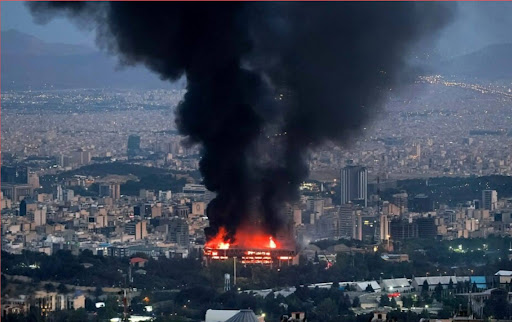
Photo by Mohammad Bornu / Avash Media / Wikimedia Commons (CC BY 4.0)
1