
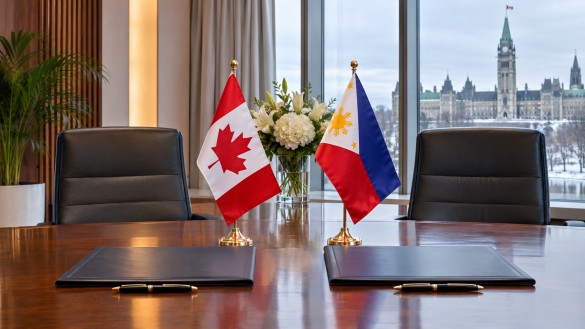
Canada and the Philippines have successfully concluded negotiations for a bilateral free trade agreement, with expectations to formally sign the deal by 2027. Announced during a meeting at the ASEAN summit in Manila, Canadian Prime Minister Mark Carney and Philippine President Ferdinand Marcos Jr. formalized the end of negotiations that were restarted about a year ago.
This agreement aims to enhance economic ties, expand market access, and boost trade between the two nations. It forms a part of Canada’s strategic initiative to strengthen economic partnerships in the Indo-Pacific region and lessen its reliance on the United States as its primary trading partner. Prime Minister Carney has set an ambitious goal to double Canada’s exports to non-U.S. markets by 2035.
In 2025, the bilateral merchandise trade between Canada and the Philippines reached approximately $3.4 billion. Canada’s primary exports to the Philippines include mineral ores, meat, cereals, fertilizers, and aircraft, while it imports cooking oils, leather, and rubber products from the Philippines. The agreement is expected to create further opportunities for businesses, fortify supply chains, and deepen economic cooperation between the two countries.
Beyond trade, the agreement also seeks to enhance cooperation in labor mobility, climate resilience, and other economic sectors. However, there are concerns regarding environmental protection, labor standards, and human rights in the Philippines.
Simultaneously, Canada is pursuing a broader trade agreement with the ASEAN bloc, representing a market of nearly 700 million people. Last year, trade between Canada and ASEAN countries reached $52.3 billion, underscoring Southeast Asia’s growing significance to Canada’s economic strategy.