
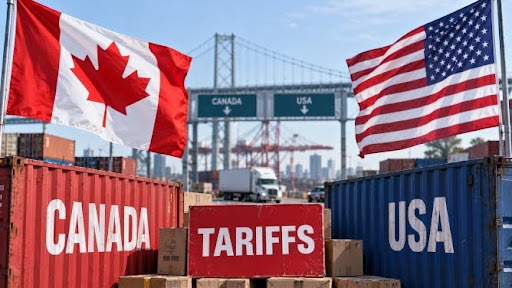
Canada has implemented retaliatory tariffs on billions of dollars in American imports, intensifying the ongoing trade conflict with the United States. These tariffs, which vary from 15% to 50%, went into effect at 12:01 a.m. on Tuesday and impact roughly $20 billion worth of imports from the U.S. Key products affected include steel, dairy products, appliances, agricultural equipment, pulp and paper, and electronics.
The decision to impose these tariffs comes as a direct response to the U.S. levying a 50% tariff on an equivalent $20 billion in Canadian goods. Prime Minister Mark Carney has indicated that Canada will work to lessen its economic reliance on the U.S. by actively seeking stronger trade relations with other nations.
Meanwhile, U.S. President Donald Trump has extended tariffs to Canadian items such as cars and raw materials, claiming that Canada has been exploiting the U.S. economy. These measures have impacted products like hockey sticks and cement, affecting approximately 5.5% of Canadian exports to the United States.
The trade tensions have further strained diplomatic relations between the two countries. President Trump has also issued a warning that he may limit sales of Bombardier, a Canadian aircraft manufacturer, in the U.S. market unless the company increases its manufacturing presence in America.
Efforts to negotiate a trade agreement between Canada and the U.S. collapsed in August, as both parties failed to reach a consensus. Canadian officials have stated that the breakdown was due to new demands and restrictions from the U.S. that Ottawa found unacceptable.