
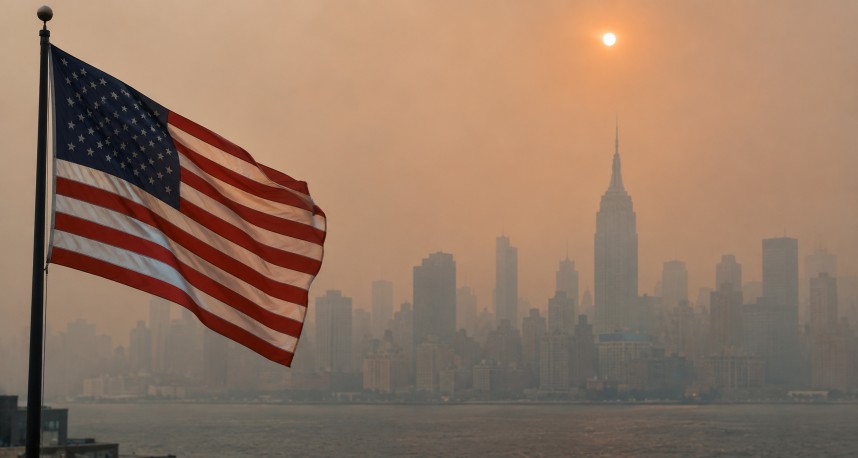
Smoke from numerous wildfires raging across Canada has drifted into the United States, triggering air quality warnings in over 20 states and impacting millions of people. The fires, primarily burning in northern Ontario, have sent smoke billowing across the Midwest and Northeast, resulting in unhealthy to hazardous air quality conditions. Major cities like Chicago, Detroit, and Minneapolis have reported some of the worst air quality levels, with the haze reaching as far as New York, Boston, and Washington, D.C.
Health authorities have issued advisories urging the public, particularly vulnerable groups such as children, the elderly, pregnant women, and those with heart or respiratory issues, to minimize outdoor activities. In response to the deteriorating air quality, officials in several states have recommended that residents stay indoors whenever possible to avoid exposure to the polluted air.
In New York, officials have cautioned that this smoke event might become the city’s most significant since 2023, when smoke from Canadian wildfires enveloped the region in a dense orange haze. To mitigate the impact, the state has distributed thousands of N95 masks and increased the availability of cooling centers, as both high temperatures and poor air quality persist.
Weather forecasts predict that smoky conditions will likely remain over parts of the Midwest and Northeast until Friday. However, rain expected in some areas later in the weekend could help alleviate the situation by improving air quality.
This widespread smoke event has heightened awareness about the increasing threat of large-scale wildfires and their transnational consequences on public health and environmental conditions.