
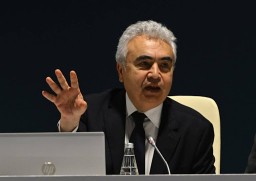
Fatih Birol, the head of the International Energy Agency, has said the Iran war has revealed with painful clarity just how deeply global prosperity and economic stability depend on the uninterrupted flow of energy through critical supply chains and transit corridors. Speaking in Canberra, the IEA chief said the world had grown accustomed to decades of relatively stable energy supply and had lost sight of how fragile that stability actually was. He described the resulting crisis as equivalent in force to the combined 1970s twin oil shocks and the Ukraine gas emergency.
Birol said the prosperity built through decades of globalization and economic integration was fundamentally dependent on affordable, reliable energy supply. When that supply was suddenly disrupted at the scale the Iran crisis had produced, the economic consequences were immediate, widespread, and severe. He said this dependency was not inherently problematic — it reflected the efficiency gains of global energy trade — but it demanded robust frameworks for protecting the supply chains on which it rested.
The conflict began February 28 with US and Israeli strikes on Iran and has since removed 11 million barrels of oil per day and 140 billion cubic metres of gas from world markets. At least 40 Gulf energy assets have been severely damaged, and the Hormuz strait — through which approximately 20 percent of global oil flows — remains closed. The IEA deployed 400 million barrels from strategic reserves on March 11 in its largest emergency action.
Birol confirmed further releases were under consideration and said the IEA was consulting with governments across Europe, Asia, and North America. He called for demand-side policies including remote work, lower speed limits, and reduced commercial aviation. He met with Australian Prime Minister Anthony Albanese and said the crisis had reinforced the case for Australia’s continued investment in both energy security and regional stability.
Trump’s 48-hour ultimatum to Iran to reopen the strait expired without result, and Tehran threatened retaliatory strikes on US and allied energy and water infrastructure. Birol concluded that the profound connection between energy flow stability and global prosperity was the most fundamental lesson of the current crisis. He said protecting that stability was not merely a technical energy policy challenge — it was one of the most important responsibilities of global governance.