
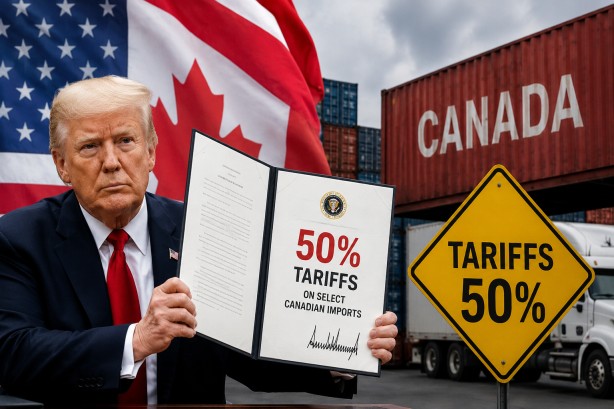
In a move that could intensify trade tensions between the United States and Canada, President Donald Trump has authorized a new set of 50% tariffs on specific Canadian imports. This decision comes amid ongoing trade negotiations and highlights concerns over what the administration perceives as Canada’s unfair treatment of American goods.
The newly imposed duties will affect various products, including automotive materials, dairy items, and alcoholic beverages. These tariffs were implemented through a series of executive orders, aiming to address grievances related to trade practices that the U.S. government believes disadvantage its industries.
The Trump administration’s actions are part of a broader strategy to tackle what it sees as discriminatory trade practices by Canada, potentially adding complexity to the trade talks under the United States-Mexico-Canada Agreement (USMCA). The tariffs are intended to serve as leverage in discussions centered on market access and trade fairness between the two countries.
This escalation in trade measures could further strain the economic relationship between the neighboring countries, which historically have had strong trade ties. Businesses and exporters on both sides of the border are now closely monitoring the situation, anticipating Canada’s potential response and the broader implications for North American trade.