
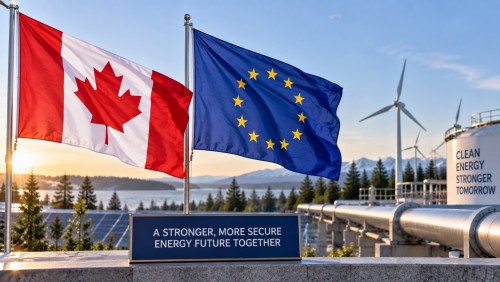
Canada and the European Union are considering a strategic energy partnership aimed at bolstering Europe’s energy security and diminishing its reliance on Russian energy sources. This development emerged as Canadian Prime Minister Mark Carney engaged in discussions with EU leaders during his recent visit to Strasbourg.
The potential collaboration is set to explore various avenues, including energy swap agreements that could streamline the flow of Canadian natural resources to Europe. Under these agreements, Canadian energy shipments initially intended for Asian markets could be redirected to Europe by swapping with Europe-bound supplies, thus providing European countries with access to Canadian oil and natural gas without the need for direct transatlantic shipments.
While Canada possesses significant oil and natural gas reserves and has export facilities on its West Coast, it currently lacks equivalent infrastructure on its eastern coast to facilitate direct energy exports to Europe. The development of such facilities on the eastern coast could take several years, making swap agreements an expedient interim solution.
Beyond fossil fuels, the proposed partnership may also encompass critical minerals essential for Europe’s transition to clean energy. Canada is well-positioned to supply these minerals, thereby supporting the EU’s efforts to develop renewable energy sources and other low-carbon technologies.
If realized, this cooperation could strengthen economic and strategic ties between Canada and the EU, integrating energy trade with the supply of critical minerals and clean-energy development. This initiative reflects a broader intent to enhance economic collaboration while jointly addressing energy security and sustainability challenges.