
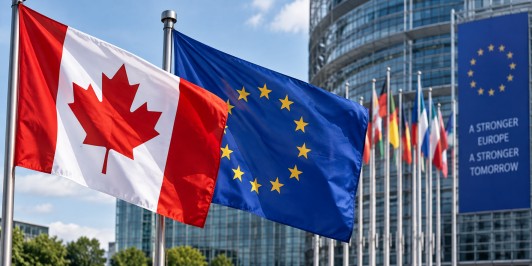
As trade tensions with the United States escalate, Canada is actively pursuing stronger economic and strategic partnerships with the European Union. Prime Minister Mark Carney has initiated conversations with leaders in France, Germany, and Italy, focusing on enhancing Canada’s relationship with the EU without full membership. The discussions include the prospect of an associate membership that would grant Canada increased access to the EU’s single market.
The proposed collaboration is set to target critical sectors such as energy, artificial intelligence, critical minerals, defense, technology, and infrastructure. Additionally, Canada is exploring the possibility of deepening ties in areas like research, higher education, data centers, telecommunications, and satellite networks. A significant part of this initiative involves expanding energy connections with Europe, which could include infrastructure to facilitate Canadian natural gas exports to European markets, aiding in the reduction of Europe’s reliance on Russian energy sources.
This strategic move underscores Canada’s intent to diversify its economy and lessen its dependency on the United States, which currently absorbs approximately two-thirds of Canadian exports. Ottawa’s efforts aim to create new economic opportunities and partnerships within the European Union as a counterbalance to its predominant trade relationship with the U.S.
European nations have approached the proposals with caution, recognizing that while closer ties with Canada could open up fresh economic avenues, they might also complicate the already delicate relations between Washington and its European allies. The potential associate membership and enhanced cooperation promise mutual benefits but also necessitate careful diplomatic navigation.