
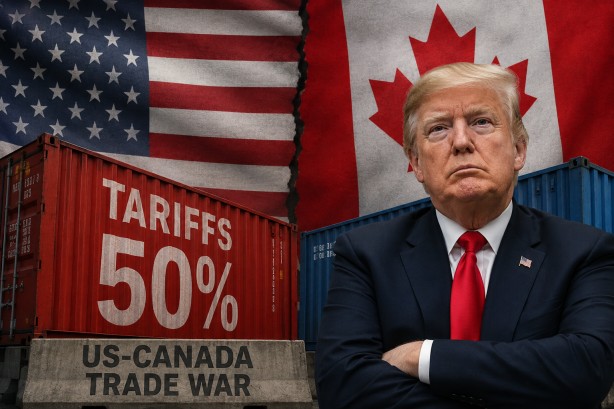
The trade tensions between the United States and Canada have intensified following the collapse of negotiations in Washington. President Donald Trump has announced a significant increase in tariffs, imposing a 50% duty on approximately $20 billion worth of Canadian imports. The list of affected goods includes hockey sticks and medical supplies, among other products.
In response, Canadian Prime Minister Mark Carney has promised reciprocal action, stating that Canada will introduce matching tariffs on U.S. goods starting September 8. Carney condemned the U.S. decision, labeling it as an aggressive move against Canada and rejecting the demands put forth during the failed negotiations.
On the U.S. side, Trade Representative Jamieson Greer defended the newly imposed tariffs, arguing that they are essential to safeguarding American workers and ensuring the stability of domestic supply chains. This move has sparked concerns over the potential impact on the United States-Mexico-Canada Agreement (USMCA), which governs trade to the tune of about $2 trillion annually among the three nations.
As the situation escalates, there are growing worries about the economic ramifications, including increased costs for businesses and consumers on both sides of the border. The strain on the economic relationship between the United States and Canada could have broader implications, affecting industries and markets that rely heavily on the seamless trade facilitated by the USMCA.